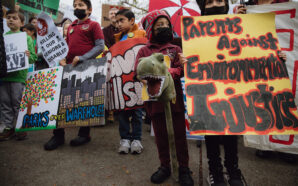

Washington State is entering the new year with an estimated revenue shortfall of $11 billion. In response, advocates for working families are urging the state to generate new revenue by raising taxes on its wealthiest residents. Research shows Washington has the second most regressive tax system in the country, with low- and middle-income residents paying upwards of 14% of their income to taxes, while the wealthiest pay just 4%.
Emily Vyhnanek, associate director of campaigns for the Washington State Budget and Policy Center, said the state needs a more progressive tax system, explaining it is not about politics, rather it’s an attempt to rebalance the scales.
“Washington already gives preferential treatment to wealthy people and wealthy corporations, and that was doubled down on at the federal level,” Vyhnanek explained. “How do we pay for the services and programs that people use as lifelines, frankly, when we’re asking people with the least to pay the most.”
Critics argue that progressive taxes drive away wealth, but Vyhnanek said this is not true, noting that Boeing moved more than 1,000 jobs out of the state after receiving one of the largest tax breaks in U.S. history.
HR-1, which passed this summer, severely cut essential programs such as Medicaid and SNAP, while giving large tax cuts to the wealthy. The richest 1% in Washington will receive more than 60% of the federal tax cuts, averaging more than 103,000 dollars a year, according to the Institute for Taxation and Economic Policy.
David Henson, board of directors member with the nonprofit Firelands Workers Building Community Power, said the state has no choice but to find a new source of revenue.
“I would like to actually see a common-sense approach to the funding for our taxes,” he stressed. “They make more money than we do. They should pay their fair share.”
Vyhnanek said there is progress, citing Washington’s 2021 passage of the Working Families Tax Credit as well as a capital gains tax, which taxes revenue from stocks and bonds more than $250,000 to fund education and child care. In its first few years, it has generated more than $1.2 billion. Vyhnanek called it a sustainable revenue source but said more work remains.
“Even though those were really big policies, they weren’t moving the needle as massively as we need to if we’re actually going to address affordability in our state,” they continued.
Vyhnanek explained that more than half of Washington’s budget relies on the state sales tax, which does not take the income of consumers into account.