
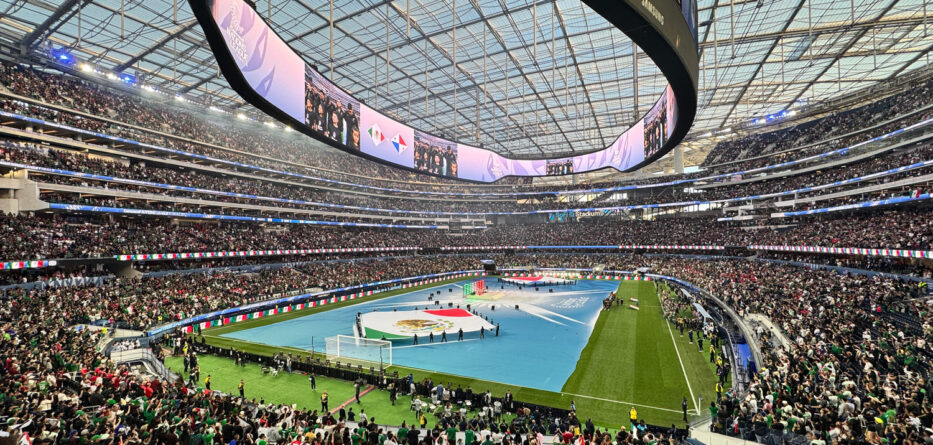
With less than a month to go before the start of the 2026 FIFA World Cup, from June 11 to July 19 in the United States, Mexico, and Canada, the U.S. travel sector is hoping for a rebound in international travel to the country, which has been declining since the beginning of 2025.
A recent analysis by the U.S. Travel Association (USTA) shows that spending on inbound international travel to the United States decreased by 2.4% in 2025, reaching $175 billion.
One of the contributing factors was the reduction in visits from Canada, which fell by 21% in volume, amid tensions between the United States and Ottawa, especially regarding trade tariffs and the idea of adding Canada as the 51st state.
But travel from Western Europe and Asia, traditional strongholds of U.S. tourism, also declined. Western Europe (including Germany, France, and the Netherlands) and Asia (including China, South Korea, and India) experienced consecutive months of decline, particularly during the peak summer season of 2025.
“The pace of recovery in inbound international travel remains sensitive to current policies, global sentiment, and geopolitical stability,” acknowledged the USTA.
Other factors impacting visits from other countries included the expansion of travel bans.
In June 2025, a ban on entry was implemented for travelers from 12 countries, a list that was later expanded to 39 nations.
In addition, a new visa integrity fee of $250 was introduced, raising the base price of a tourist visa to $435.
The USTA expects that, thanks in part to the 2026 FIFA World Cup, inbound tourism will grow by 3.4% to reach 70.6 million in 2026, driven by leisure travel.
The same firm expects international tourism spending in the United States to recover by 1.6% to $178 billion in 2026. However, that figure is still 18% below 2019 levels (adjusted for inflation).
Growth is projected to accelerate in 2027 and subsequent years, but a return to 2019 levels (79 million visits) is not expected until 2029. Undoubtedly, domestic leisure travel has been the lifeline for the U.S. tourism sector.
Following 2.1% growth in 2025, spending on domestic leisure travel continues to expand, increasing by 0.9% to reach $909 billion in 2026, with faster growth projected for 2027 and beyond.
Growth in 2026 is expected to be impacted by rising inflation in travel and other goods and services.
Americans continue to prioritize travel, but spending is driven by higher-income households. Travelers are expected to opt for shorter, more affordable trips, including regional and high-demand destinations, in response to rising prices.