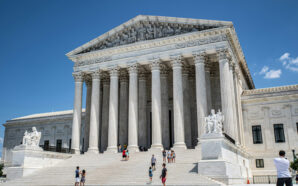
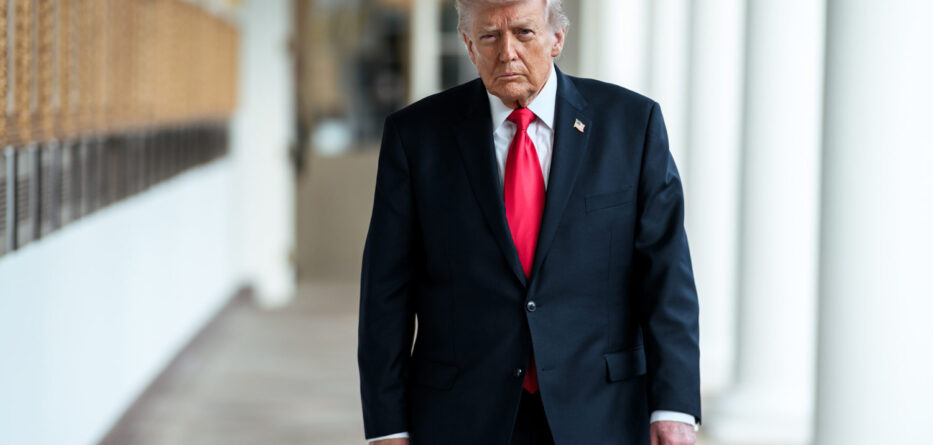
In a historic session, with the unprecedented presence of President Donald Trump himself, the justices of the Supreme Court heard oral arguments on whether the government can restrict birthright citizenship for children with at least one undocumented parent.
This was a principle that seemed as solid as the court’s own marble, but it was subjected to constitutional debate through an executive order, starting on the first day of President Trump’s second term.
Although the court will not issue its ruling until the summer, tentatively in June or July, the session made one key point clear: the skepticism of the justices.
A majority of the justices—including several conservatives—questioned the Trump administration’s proposed reinterpretation of the 14th Amendment.
These were not just technical disagreements. It was, rather, a visible discomfort with the idea that a constitutional principle over 150 years old could be redefined by decree.
The implicit message seems clear: if the meaning of citizenship is to be changed, an executive order is not the way.
A second point is the reactivation of a debate that many believed was settled. For generations, birthright citizenship was a reality of American law, supported by precedents such as United States v. Wong Kim Ark (1898).
However, the mere fact that the Court agreed to hear this case shatters that sense of permanence. Today, what was once unquestionable is once again debatable. And that, in constitutional law, is never trivial.
The third point plays out outside the courtroom: social anxiety. For millions of immigrant families, especially Latinos, the case is not an abstract exercise, but an existential question: what does it mean to belong? The possibility—however remote—that hundreds of thousands of children born in the United States could be left in legal limbo has reignited fears about a “subclass” without full citizenship. In that sense, the litigation is already having real effects, even before a ruling is issued.
Trump’s presence at the hearing underscores that this is not just a legal case, but an ideological battle over national identity.
Birthright citizenship has become a symbol: for some, of inclusion and historical continuity; for others, of a system that must be revised in light of new migration dynamics. The Court, whether it likes it or not, is at the center of this clash.
Finally, the most uncertain aspect remains: the scope of the ruling. Although the justices’ skepticism suggests a possible defeat for the proposed restriction, the tone of the questions also revealed that some justices are exploring nuances and middle ground.
It is not unreasonable to imagine a decision that reaffirms the general principle but opens interpretive loopholes for future litigation. In short, the hearing didn’t resolve the debate; it amplified it. The Supreme Court isn’t just evaluating immigration policy, but the very meaning of citizenship in the United States. And that’s a conversation that, whatever happens in June, is far from over.