
Arturo Hilario
El Observador

Hoppers Director and co-writer Daniel Chong is photographed on July 10, 2024 at Pixar Animation Studios in Emeryville, Calif. Photo Credit: Deborah Coleman / Pixar
It’s a beaver’s world now. And they’re here to patch up the world like a dam.
Hoppers, the new film from Disney and Pixar Animation Studios, focuses on the often forgotten world of the noble and hardworking beaver and their engineering marvels that once ruled the rivers of North America.
Directed by Daniel Chong and written by Jesse Andrews and Chong, the film follows Mabel Tanaka (Piper Cuda), an intrepid and feisty environmentalist whose solo fight for animal and environmental rights amongst the edges of civilization in the pacific northwest tends to get her in trouble and be seen as a nuisance by her community.
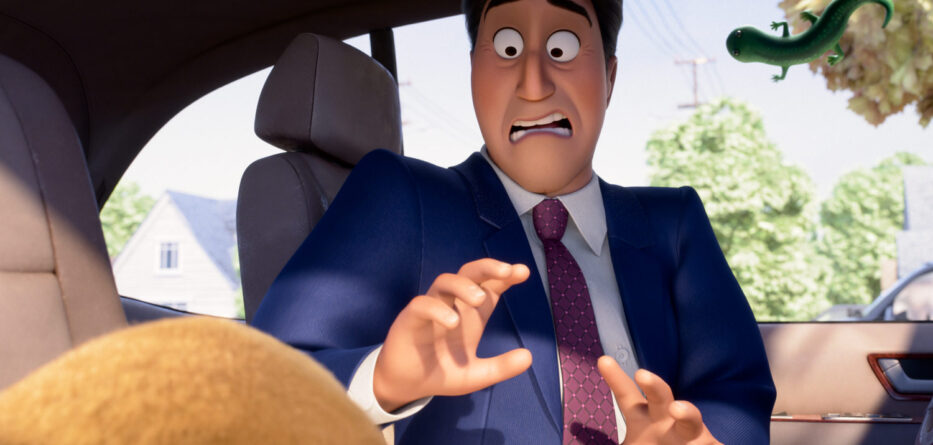
When a project proposed by the city’s mayor Jerry (John Hamm) to create a large new highway threatens to cut through and destroy a beloved region of the local forest, Mabel must resort to whatever means she has to save the animals and try to convince her fellow humans that harmony with our animal neighbors and nature is incredibly important.
So in Pixar fashion, the story takes a wild turn. Mabels desperation leads her to find her tools to fight back in the basement of her university, where one of her professors and a few assistants have been working on putting a human mind into an animal machine, thus the Avatar comparisons.
I see reflections of my work in the movie, and I see the messages that I care so deeply about being translated and communicated in a way that will reach audiences I could have never reached on my own. I think it’s going to make a difference.
-Dr. Emily Fairfax
And although the crew of the film joke about it and lean into the reference, Hoppers differs greatly from the James Cameron epics, finding a unique humor and balance between sweetness and chaos in the animal kingdom.
Through not so approved means, Mabel is able to transfer her mind into her tool to save the forest: a tiny, fuzzy beaver robot, which will probably lead to a lot of stuffed animal sales in the future.
Meant to visually mimic a beaver in order for scientist to closely observe the animals in the wild, Mabel instead uses her newfound tech to get into the beaver community in order to spur action to stop the construction of the highway.
What happens in the film is one of Pixar’s most unique, funny and hopeful stories, connecting the viewer with the appreciation of the natural world and just how important it is to everyone’s survival.
This isn’t a film that will guilt you into joining Greenpeace, but it might get you to go out for a walk and take in and reflect on what’s just out of view. It is a story of fighting for the environment because it reflect on us all how we treat nature and the gifts it gives back to us daily.
With the lead voices of Piper Curda as the aforementioned Mabel, and John Hamm as the mayor, the cast of comedy royalty also includes Dave Franco, Meryl Streep, Isiah Whitlock Jr., Bobby Moynihan, Vanessa Bayer, Melissa Villaseñor and Kathy Najimy, who all elevate Hoppers into becoming one of Pixar’s funniest, chaotic and refreshing projects.
Hoppers Producer Nicole Grindle is photographed on July 22, 2024 at Pixar Animation Studios in Emeryville, Calif. Photo Credit: Deborah Coleman / Pixar
Beavers 101
The large furry rodents that work to create dams in rivers across the world are known as ecosystem engineers, which are species that create and have large impacts on habitats. The work Beavers do leads to development of wetland habitats which in turn attracts animals from all across the zoological hierarchy, from salmon to insects and bears.
The wetlands created by the beavers’ burrowing and damming of rivers can also protect these regions from fires, and create excellent environments for nature to thrive in a diverse habitat, all thanks to Beavers.
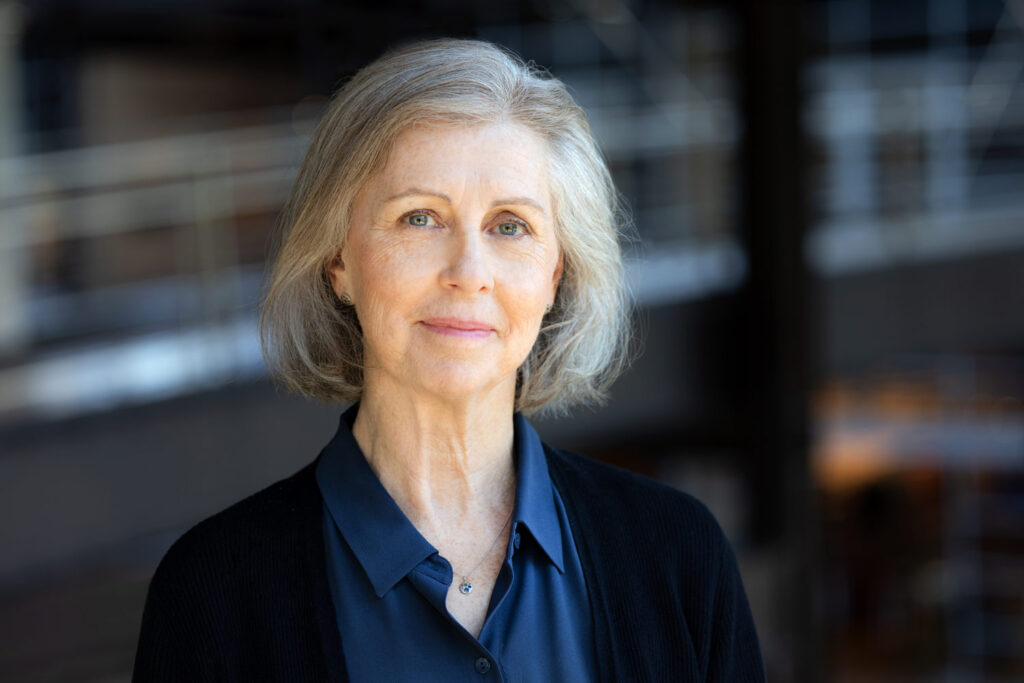
In order for Pixar to bring this world to life in an accurate manner, they reached out to the preeminent expert on beavers in the U.S., Dr. Emily Fairfax, an Assistant Professor of Geography specializing in ecohydrology at the University of Minnesota who took the crew working on Hoppers out onto the field, showing them firsthand the homes and work of the humble beaver.
For five years Dr. Fairfax worked alongside the animators and writers to help bring a sense of realism to the project and make the real life connections that go along with the comedy and absurdity of a robot beaver interacting with talking beavers.
“I feel so proud to have been of this. It’s been a long process. At times, I’d be like, “What if I don’t like the final movie? What if I put all this in and it’s not what I hoped?” Immediately, that thought was squashed. It’s exactly what I hoped. It’s incredible. It’s better than I hoped.”

Production Designer Bryn Imagire is photographed on September 18, 2025 at Pixar Animation Studios in Emeryville, California. Photo Credit: Stephanie Martinez-Arndt / Pixar
Through this time Dr. Fairfax saw the innerworkings of Pixar as they turned her details, data and life’s work into an animated study of the real world beaver mixed with the fantastical world dreamed up by the filmmakers.
She says one aspect she found incredible was, “watching the art come together and seeing things go from sketches to these gorgeous concept paintings and seeing the field sites that I know very well in my own vision translated into art and then translated into animation.”
Through it all, much of the story focus stayed on the incredible and real aspects of the beaver, such as their ability to maintain the dams and thus the health of the entire ecosystem around them.
“It’s hard to say how much is intentional because I’m not in the beaver’s head, but we know that they’re really focused on maintaining the dam. So when there’s a suspicious break, a change in the setting, and then it gets fixed overnight, you’re like, ‘I think this was on purpose. I think you’re trying to manage the water.’”
In Hoppers, the main dam is called the Super Lodge, which serves as the center of the wetlands where our main character of Mabel finds herself trying to get the attention of the leader of the beavers, King George (Bobby Moynihan), who is a pleasant leader who knows the name of every ant and fish and bird in the sky, all citizens of his wetland world.
Dr. Fairfax hopes that Hoppers gives way to real world interest in beavers and learning more about the species and their incredible work.
“I see reflections of my work in the movie, and I see the messages that I care so deeply about being translated and communicated in a way that will reach audiences I could have never reached on my own. I think it’s going to make a difference. I think in 10 years or 15 years, when I’m teaching my college classes, I’ll start giving my lecture about beavers. Instead of everyone being like, “I never knew that, everyone will be like, ‘Yeah, we get it. We all know. Move on. Old news.’ Because they’ll have learned. They’ll have really internalized it from an earlier age.”
And while she’s promoting a Pixar movie what would make more sense that promoting environmentalism and a pursuit of scientific interest in the world around us? When I ask her what she would suggest to those wanting to get more involved in conservationism and getting to know real life beavers?
“You know, visit your local beaver pond. And the first time you visit it, just take it in. And then next time you come back, try to count all the bugs you see. And then the next time you come back, try to count all the birds you see. And every time, try to visit it with the new lens, because I think you’ll realize there’s so much here that you could visit this pond every single day for a year, and you’ll see something new every single day.”
Getting in Touch With Nature & Feelings, the Pixar Way
Hoppers is a film about nature, but it’s also a film about listening, communication, and trust, both between animals and humans, and also between humans and other humans. In the film Mabel and her new animal friends must deal with a threat that can destroy their home, and thus have to lean on each other to get through the journey to save the forest.
But in actuality one of Mabel’s biggest hurdles is not learning how to communicate with the animals, that’s actually a funny but brief part in the story, it’s getting other humans on her side and to listen. That then becomes one of the largest obstacles to saving the forest from the concrete fields of a multi-lane highway, thus exploring human connections in order to save animals and nature.
Producer Nicole Grindle says, “I think the story is one that relates because I think Mabel’s feeling that, too. I think you start the story understanding that things aren’t working. They’re out of balance. No one’s listening to her. She feels that fracturing. And I’d hope that by the end of the film, people feel like we’re validating kindness, we’re validating connection, and that people are left with a sense of hope. And then maybe you walk out of the theater feeling like your spirit is renewed, and we can go out there and fight to heal the world.”
In a current society where the virtues of trust, morals, and truth have been whittled away, how does the creative team for the film hope Hoppers might help patch up the dam of social connection and offer a positive outlook to audiences?
Director Daniel Chong says, “I felt a lot of disconnection when I was coming up with the idea for Hoppers, and I remember feeling that like, ‘Oh, there’s something very grounding when you remember that you’re an animal, too, and that you are a part of this giant ecosystem.’ It’s like what George says, ‘Human homes, animal homes, the same thing.’ And there’s something very humbling, but also very grounding about remembering that you are a part of this thing. And it connects you to the environment you’re around, but also it connects you with other people, too, because you realize we’re all part of this. Maybe that’s a little hokey, but I don’t know. It always just was a very interesting revelation when you remember, ‘Oh, yeah, that’s right. We’re all animals.’”
As Pixar does with every film, they try to step into the perspective of their characters, whether it be getting close up with bugs on the floor, to going to Mexico during Día de los Muertos ceremonies, it makes a difference in the quality of the work when they have done the due diligence in examining what they are trying to achieve by having done researched.
With Hoppers, the filmmakers and animation department went out to places as far as Cheyenne Mountain Zoo and Cameron Peak in Colorado, to as close as the Oakland Zoo, where filmmakers observed their various bears for the character of Ellen, who is voiced by SNL alumni Melissa Villaseñor.
For many of the crew working on this film, the project helped broaden their connection and understanding of nature, and in turn that helped form the final product.
Chong says, “I remember when we went to Yellowstone, one of the really grounding things is when we were with our guides, and it was really the dead of night, it was 3 AM or 4 AM or something like that. It was super early. We were just told to stand there and just listen to nature and just take it all in. It was just a very emotional and very connective experience of feeling what’s out there and nature and the sound of it. And that there was something, obviously, that I don’t really do that much, to be honest. And we’re so on technology. It’s like taking away our ability to really just to relax and be out there in nature. I think it was just a really lovely experience.”
Production Designer Bryn Imagire says that working on Hoppers, “actually made me want to be outside much more. And we did take a lot of trips, and every field trip that we went was outside. So I think the message of how important nature is for us and for animals in its very subtle way, I think had an impression on me that is still in me. And that I’ll carry, I think, forever.”
Hoppers is exclusively in theaters March 6, 2026.