Arturo Hilario
El Observador
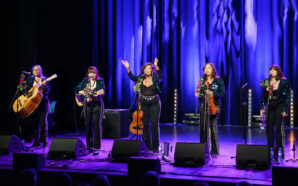
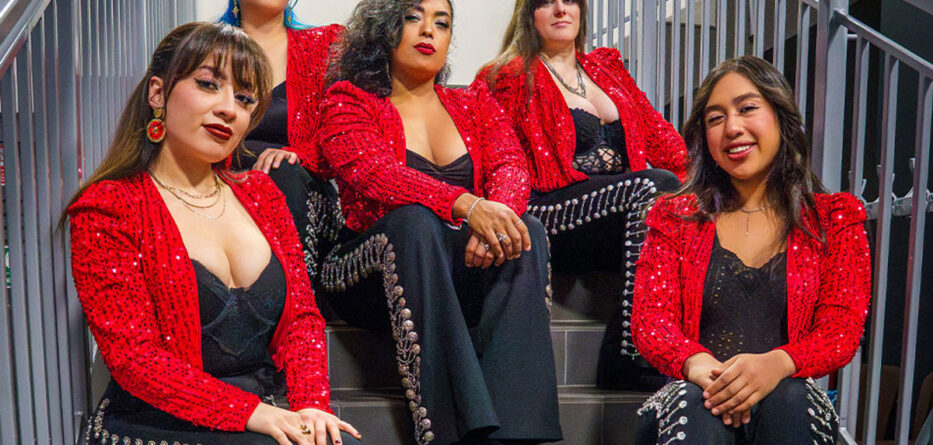
Flor de Toloache is an all-female mariachi group founded in 2008 and based out of New York City. In 2017 they won a Latin Grammy for Best Ranchero/Mariachi Album, and continued evolving their unique contemporary approach to the classic Mexican genre.
The group is set to perform at SFJAZZ at the Miner Auditorium in San Francisco on Saturday November 21, bringing their eclectic New York style mariachi sound and accompanied by founding member Mireya Ramos’ solo music which at its core is a serenade to feminism and cultural memory.
Founded by Mireya Ramos and Shae Fiol, Flor de Toloache was a reflection of the diverse and but also sparse world of Mexican music representation in New York City, a place that would eventually grow its Mexican diaspora and cultural reach but a place that was also difficult to fill up an all-female mariachi group in the Obama era, as Ramos can attest.
She is the multi-talented visionary behind the band’s inception, and while remaining part of the ensemble has also ventured into solo work which goes back to her Mexican roots while maintain a contemporary flourish and feminist focus.
Recently she spoke about the trials and treasures of starting Flor de Toloache, it’s evolution, the explosion of Latino culture and sounds in American media landscape, and exploring her own familial history and diving into the Mexican side of her culture as a solo artist through the therapeutic nature of rancheras, those soul affirming ballads that reach into your emotions and essentially command you to pull them out to the surface.
Tickets and info for this weekend’s show available at www.sfjazz.org.
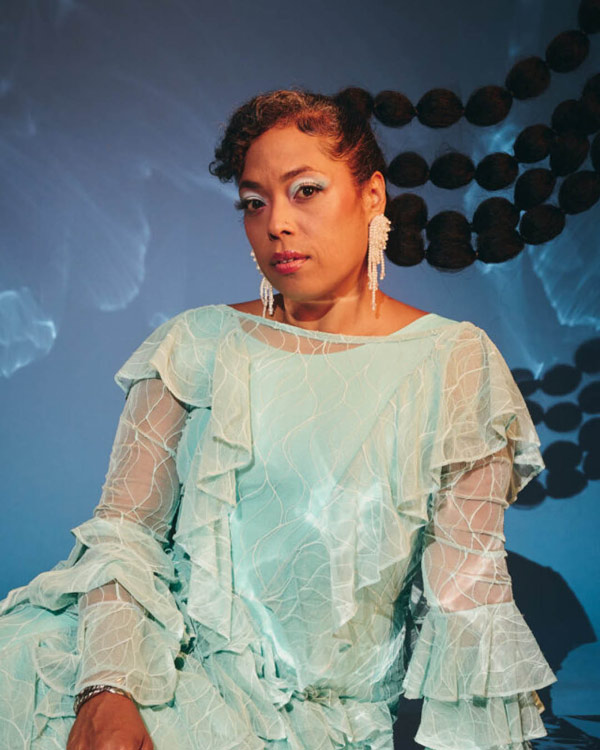
Flor de Toloache is an all-female mariachi ensemble based in New York City. Photo Credit: Flor de Toloache / Mireya Ramos
I wanted to start off with asking about Flor de Toloache and the mariachi portion of it, there’s so much nuance and diversity in your sound and your roots, compared to the history and ascents of many other famous traditional mariachi groups. Could expand on how your sound came to be, mixing these sounds of Latin America, New York City, and the world?
I personally come from the mariachi tradition. My dad was a mariachi and he’s originally from Michoacán, and I played traditional mariachi for many years, over seven years before I started Flor de Toloache. And actually, that experience in itself sparked the idea of creating an all-female mariachi in New York because we were only two ladies in the scene of mariachi in New York for many years.
It was an amazing experience to play mariachi and to connect with the community in that way and play at the traditional parties and see how people connect with mariachi and how they reminisce, how it takes them back to memories and all that. That’s the beauty of the tradition, right?
But I would sometimes have a negative experience with some of the mariachis because they were pretty macho. And a lot of the mariachis still to this day are. It’s kind of part of the genre, and we’re trying to change that. But because of that experience, I ended up creating Flor de Toloache.
I wanted to start doing my own arrangements and composing my own rancheras, et cetera. And it was an excuse for me to meet other women in the scene, or at least meet other women to create music with, so I started Flor de Toloache with that intention.
During that time, this is in 2008, the Mexican community was just starting to grow rapidly. There wasn’t, like in California, there’s generations, and it was Mexico before it and a lot of the West Coast. But here there were no deep roots, so it was really hard to find women that would play guitarrón or vihuela, or actually impossible. And so I had to learn. I decided to learn how to play guitarrón out of necessity.
I started asking different ladies from different scenes, different genres, to come and play and if they were interested, to create this group together. And I think that’s just organically New York being New York, the accessibility you have here, the diversity that exists here, and then also the lack of— I think that that’s what created this new sound that came out of New York, which is Flor de Toloache.
-Mireya Ramos
Then I started asking different ladies from different scenes, different genres, to come and play and if they were interested, to create this group together. And I think that’s just organically New York being New York, the accessibility you have here, the diversity that exists here, and then also the lack of— I think that that’s what created this new sound that came out of New York, which is Flor de Toloache.
And it was a great time because New York was obviously very different than now. We were part of that growth of how the Mexican culture started to become part of New York culture. Now you can’t think of New York and not think of how Mexican culture has impacted New York, and so I think that we were part of that movement as well.
So all of that, I think, really influenced our sound and our approach to mariachi. I myself, even though I come from the tradition, I’m half Dominican, I was raised in Puerto Rico, and my Mexican experience is through my dad and through the music. I had never lived in Mexico, so I have just a romantic idea of what this was.
That’s what I shared with anyone that became part of Flor de Toloache. Some women had played mariachi, some women had never played mariachi, so there was their first experience. But I made sure that we would play with other mariachis and that they would learn the style and we would even join a mariachi that I used to play with, at some parties so they could get used to the tradition and the traditional repertoire.
But the intention was always to do our own thing and to be genuine to who we were, which is not the traditional Mariachi. So, I think that all of that contributed to the result of this fusion and this very reflective of New York sound of Flor de Toloache. And we were in a very open, safe space to do that.
You started Flor de Toloache started in the summer of 2008, since then, not only has the Mexican culture in the East Coast grown, but also across the US the música en español, Latin American music has also experienced the growth and exposure in mainstream America’s cultural landscape.
You guys did a Tiny Desk Concert in 2015 before they even had the concept of a Hispanic themed ‘El Tiny’ concert series. So how has it been to be there at the kind of cusp of when musica en Español started gaining more of a footing in American media, and see how this exploration of music and culture has flourished thanks to bands like Flor de Toloache that laid the groundwork?
It’s beautiful to see that we were part of that contribution of this boom of celebration of our culture. And it’s pretty cool to also say, “Oh, we’re still an indie band and we accomplished those things back then independently.” But also, you know, there’s some pros and cons obviously with being indie and also being a band from back then.
It’s hard because you’re competing with these new artists that are coming out and then sometimes not given the recognition of being the pioneers of something. And I think a lot of bands from that time, a lot of us struggle with that. Although I would say that would be one of the cons, but on the other side, it’s very rewarding and it’s really cool to witness and live in this time and see how our work has impacted what Latin music is now, especially for women.
It’s harder to give that recognition to women. If we were a group of men, I think it would be a different story.
If there’s one thing to take from that is highlighting the progress and ongoing fight for female empowerment in the music industry. You just collaborated on a song with Mexican artist and activist Vivir Quintana that’s called “Mi Raíz”. Can you talk about the genesis of how that came to be?
Yeah, so like I was saying in the beginning for me, my only window into Mexican culture, which I hold close to my heart, is through my dad and the music. And I’ve never lived in Mexico, but I’ve always wanted to, and now this year, I finally made the move and I’ve been there for 6 months.
And my first collaboration that came out of this new stage in my life, it was with Vivir Quintana, which is so perfect for me because I admire her. She’s very vocal about being a feminist and she really does live by the things that she says and is constantly giving back to the community, and so I think that it could not have been a more perfect collaboration.
And also, we just really got together to write with no plans. It was just, “Let’s see what happens.” And this was in September, she out of the blue asked me if I was close to my grandmother. And I had just dreamt with my grandmother the night before. So for me, it was like, “Whoa, that’s such a random question. Okay. But also, what are the odds that you ask me that?”
My grandmother was like my mom. She raised me. So we ended up writing the song that became like a love letter to our maternal ancestors and a celebration of our roots and how we want to pass that on, and I just thought it was perfect. Originally I wanted to release it for Day of the Dead, but it didn’t quite happen that way, but it was released November 13th. And it was just very special. Vivir is also kicking ass right now as an artist, and so that’s pretty cool to collaborate with her at this moment as a solo artist.
And speaking of your solo work, your latest release was Besos y Copas, and I was wondering if you could tell me a little bit about how this project came about and let you explore your own life and sound with that album?
Well, rancheras for me is one of the main reasons why I do music at all. Growing up watching my dad sing and watching people react to the way that he really transported people into the song and the emotion and painting this beautiful picture of whatever he was singing. For me, it was just so magical that I dreamt one day of doing that myself and then eventually writing my own rancheras.
And so rancheras are always very present for me, no matter what genre I’m doing or what I’m performing or interpreting. And this year I wanted to put out a cumbia album, but it didn’t happen. So one of my best friends, a trombone player who I collaborate with a lot, Trevor Turla, he’s not Latin or had no idea what rancheras were before me. But he’s seen me perform in different configurations and different stages with different people. And he’s like, “You need to do an intimate album of just rancheras, very simple: guitar, your voice, capture that.” And so we decided last minute to do this album, Besos y Copas, and it was just perfect because I creatively needed that.
I needed that outlet. And rancheras are definitely a therapy session for me in every way. Even if I’m not heartbroken or whatever it is that I’m going through, it’s still so therapeutic. And so I really really enjoyed putting together that album, and literally, we did it in two days at a friend’s studio in New York, and we just put it out. It was really fun, it was a labor of love. And then also, I wanted to base it off the ranchera song that Jenni Rivera made famous, “Besos y Copas” because she’s also a badass forefront woman in a Mexican genre that was usually very male-dominated to this day, like mariachi. But she still kicked ass and did her thing, very vocal, and she was herself. And I also wanted to celebrate that through that song.
And now that you are living in Mexico, Do you see more of these collaborations with Mexican artists on the horizon?
Absolutely. I’m really hoping to observe a lot of what happens in Mexico City, which is really quite amazing creatively. And there’s this culture of composing all the time. Every day, literally, people get together and compose. And I never— I don’t think I’ve ever seen that anywhere else in my life. I mean, as often as it happens there. So I think that’s really inspiring and refreshing. And it’s really cool to see how people are using the roots of whatever genre they’re creating and then just making it their own with Mexican instruments or rhythms or sounds. So yeah, I’m really enjoying this new stage and observing it all and taking it all in. And I hope that also being there physically and connecting and being in the scene will allow me to collaborate with more Mexican artists.
Yeah, and it’s— I mean, I love Mexico City. Mexico City is amazing. And it’s great to hear that there’s that collaboration happening there. And like you said, all the constant writing and exploring the art. So you guys, I mean, Flor de Toloache is coming to the Miner Auditorium this Saturday, and I was wondering what people could expect for this SFJAZZ show from you guys?
I’m super excited because first of all, I love that venue. We’ve performed there a few times and it’s always so special. Also, it’s the first time I present both of my projects the same night as part of the whole show, and so it’ll be a treat for me and hopefully for the audience, bringing people into my world and the things that I’ve worked on, a little bit of a window into my journey.
But also showcasing how Flor de Toloache is truly a collective of women from all over, and it’s not just Shae Fiol and I. It started there, but now it has become more than that and it’s beautiful to witness that there’s a next generation of Flor de Toloache, that they’re excited to be part of this movement and this collective, and they’re excited to push forward the genre and to preserve it, but also make it their own and bring in their story as well into the project. And so I think it’s going to be a beautiful night and very special.
Speaking of legacy and the future, since founding Flor de Toloache you’ve played at the White House for Hispanic Heritage Month, you’ve collaborated with legends of the music world, and you have your Latin Grammy win and nominations. Now you are collaborating with up and coming Mexican artists and exploring different Latin American genres. What are your aspirations with both Flor de Toloache and your own projects? Where would you like to see that go?
I hope that our music continues to impact women in mariachi and women in the industry. I hope that people cover our songs, that’s always very special to see. I hope that both Flor de Toloache and my solo project reaches more corners of the world and that things change for women in the industry. And I hope that we really continue to inspire people.
I mean, obviously, it’s great to win a Grammy and all that, but really, at the end of the day, it’s way more meaningful to touch someone’s heart and bring joy or heal someone through music. And so I think that that’s priceless and that if it can inspire the next generation to want to continue to do music like we do, that’s also where our heart is, and that’s what we hope. Oh, and also we would love to do a Latin American tour, which we’ve never been able to do, so hopefully that will happen soon.
And can we expect the cumbia album you mentioned earlier at some point soon?
Yes, it’s coming out next year. I think the first single will come out in February, and it’s all with collaborations. Each song has a collaboration, and the point of this album too is to showcase and celebrate how cumbia has traveled through Latin America and how it has been adopted by each country and expressed differently in each country. It’s probably one of the only rhythms that comes from a place in Latin America and then just has become something else in each country.
A cumbia album would be a perfect segue to kick off a Latin American tour with all your music.
Absolutely! I think so.