SAN FRANCISCO — Seven pro-Palestine activists were sentenced to 30 days in jail, six months probation, and ordered to pay fines and restitution amounting to over $1,300 for their roles in the 2024 shutdown of the Golden Gate Bridge.
The ruling followed weeks of speculation that the city’s District Attorney, Brooke Jenkins, would seek to retry the case following an earlier hung jury on the most serious felony charges.
“Throughout history, civil disobedience has mostly involved accepting legal consequences,” said Superior Court Judge Teresa Caffese at the start of sentencing. “In that spirit, those who blocked the bridge and disrupted the lives of hundreds of commuters should be treated respectfully, but should also be prepared to accept the consequences of their actions.”
The defense team says it will now move to appeal both the jail sentences, and the underlying convictions.
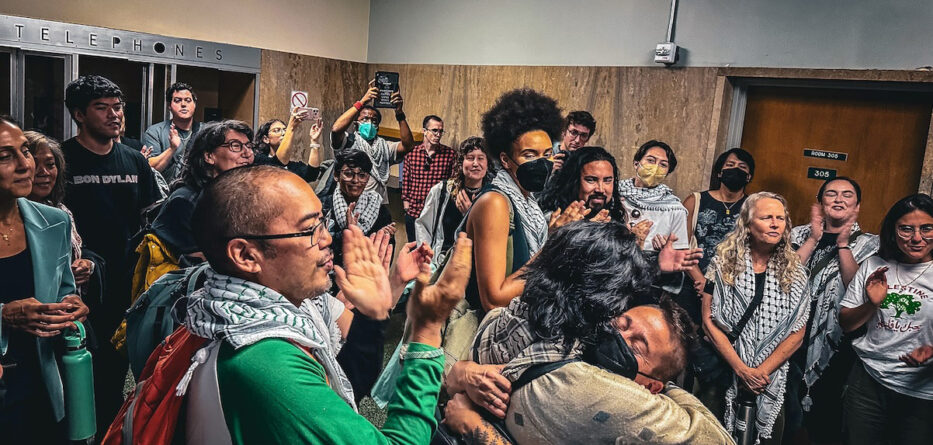
Supporters of the defense celebrated the outcome at the San Francisco Hall of Justice on Friday, August 21. The defendants — Sarah Ferrell, Conrad de Jesus, Em Tillotson, Bhavika Anandpura, Rocky Chau, Sara Cantor, and River Allen — had faced multiple charges, including unlawful assembly, obstruction of a thoroughfare, and false imprisonment.
The charges carried up to five years in prison.
Half of the 30-day sentence will be served through the Sheriff’s Work Alternative Program.
On April 15, 2024, some 26 activists stopped morning traffic on the iconic bridge for four hours while protesting Israel’s actions in Gaza which many in the international community describe as a genocide. Jenkins’ office later identified the seven defendants as the core organizers, charging them with a series of crimes including felony conspiracy.
Audible gasps rose up in the courtroom Friday when prosecutors announced they were dismissing that charge, which some had feared Jenkins would attempt to retry. Assistant District Attorney Angela Roze said a retrial wasn’t necessary because the protestors had been held accountable, and that it would require courtroom resources and seating another jury.
The cost of the prosecution has been a consistent message of the defense, who argue the district attorney is wasting public resources on non-violent offences. According to supporters of the defense, the trial has cost up to $650,000 dollars to date.
Jenkins said in a statement that she encourages exercising First Amendment rights, but “this serves as a reminder that when such acts become unlawful and compromise public safety that there will have to be consequences.”
The defense team objects to their clients receiving any jail time. For the past two years, they maintained that the decision to prosecute the Golden Gate 26 — as the protestors have come to be known — was politically motivated, and represented a disproportionate response to the protest.
Attorney Nuha Abusamra is on the defense team. She challenged Judge Caffese on the jail sentence, requesting electronic monitors or home detention, which the judge denied.
“Clearly putting them in jail serves nobody any use,” said Abusamra. “The judge did not provide a reason. I asked on the record: what could it be other than the fact that they were protesting for Palestine? Meaning their political message.”
Abusamra added, “I don’t believe she responded.”
Judge Caffese addressed the defendants individually and referenced character statements submitted on their behalf. She says they showed that each had backgrounds in service, activism, and earnest participation in their communities.
“You are not being sentenced for your beliefs,” Caffese said. “You, the defendants, are not new to civil disobedience. Each of you knew you were violating the law.”
Following the sentencing, attorney Anthony Gideon referenced the long history of protests on the Golden Gate Bridge, including the 1989 Stop AIDS or Else protest, the 2020 Black Lives Matter protest, and a 2021 pro-Immigrant protest.
“They can say a million times that this was not politically motivated. But in none of those cases did the CHP solicit people to come forward to say they were falsely imprisoned. In none of these cases did a district attorney bring false imprisonment charges. In none of those cases, did they bring a felony,” he said.
Defense attorney Jac Lyons says this case is part of an emerging trend of heavy handed over prosecution in San Francisco where complaints about rising crime and drug use in the city grew following the COVID-19 pandemic. Jenkins is widely seen as taking a tough-on-crime position.
Lyons referenced charges against four people arrested at San Francisco Trans March this year noting the two are connected.
“Any form of dissent is being punished now in San Francisco, whether it’s fighting for the liberation of trans people, fighting for the liberation of Palestine, in the eyes of DA Brooke Jenkins, that’s unacceptable.”
Jenkins wrote in a statement, “We believe that imposing a custodial sentence will hopefully act as a deterrent to future criminal conduct by others considering blockading a bridge by showing that San Francisco, while supportive of First Amendment activity, does not condone offenses that place public safety at risk.”
Defendant Conrad de Jesus spoke to the crowd on the courthouse steps following the sentencing,
“Two years of fighting the district attorney has taken a toll on us both mentally and physically. Oftentimes, it has felt like the weight of the world was on each of our shoulders. However, it only takes a moment to reflect to see what Palestinians in Gaza are going through to bring things back into perspective. It makes us want to fight even harder for a free Palestine.”