
Arturo Hilario
El Observador
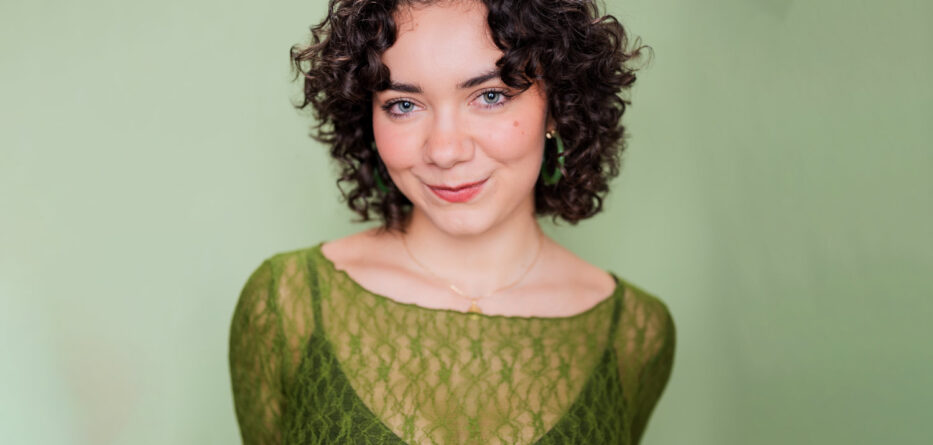
Mari Grossmann is a Venezuelan-American actor, singer and dancer who is making her national tour debut with the groundbreaking rock opera The Who’s Tommy, the acclaimed musical based on Tommy, itself an iconic concept album from 1969 from British rock band The Who.
Pete Townshend, the co-founder of the highly influential rock band co-wrote the stage production in the 90s while on rest from a wrist injury, what followed is a seminal stage work that has been around for nearly 35 years.
The original album, as well as a cult classic film adaptation and the stage musical are all beloved by fans around the world, with the most determined following the stage production across the country, seeing it as many times as possible.
Grossmann, who is a 2024 graduate of Western Connecticut State University, has worked on smaller scale productions since graduating so she is not new to the magnetism of these types of shows. She previously worked on a production of the delightfully odd Rocky Horror Show in Maine and came to understand the power and draw of what a cult classic can be to audiences.
What is new is the experience of working on a full-fledged national tour, and the travel that comes with it.
This is Grossmann’s first trip to the West Coast and at the time of writing she was performing in LA, her first experience on this side of the country.
As she makes her way up to the Bay Area next week, she took some time to speak about the experience of earning her first big job out of school, being a Latina in the performing arts, the strong support her immigrant parents and family have for her career, and how The Who’s Tommy captivates audiences with its memorable music, energy and visual splendor.
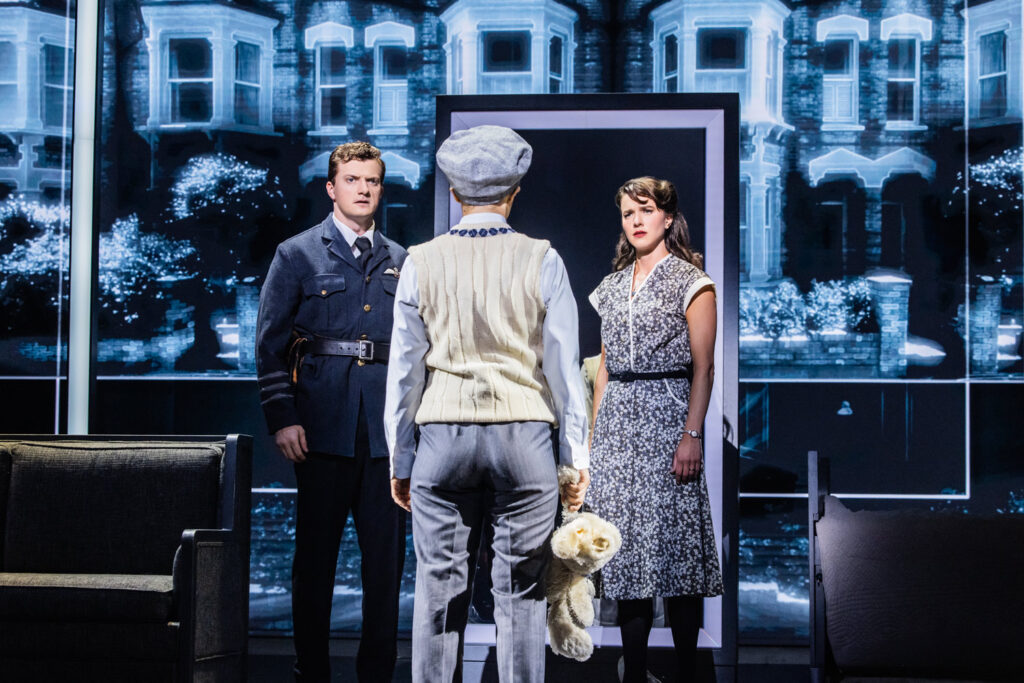
The Company of the National Tour of The Who’s Tommy. Photo Credit: Evan Zimmerman / MurphyMade
I wanted to start off by asking what your journey into the performing arts was like? What were your inspirations to get into this career? I read something about maybe The Nutcracker being a starting point in kindergarten.
Okay, so I didn’t really grow up doing theater. My family is from Venezuela. Both of my parents are from there. We moved to Maine, like the coldest state you could imagine, when I was 2. And we had some family friends that were in The Nutcracker. They were some like slightly older kids than us, and we went to go see them, and I remember just really falling in love with that as a kid.
And I remember dancing in my living room afterwards, and my parents were like, “Okay, we’re gonna put her in ballet.” So that happened, and then I did ballet ever since kindergarten up until through high school. Sometime around middle school, I was singing in church, and my siblings were doing band, and I saw one of my friends in a production of Guys and Dolls, and I was like, “Wait, hold on, this is all connected and I can do all of the things?” She convinced me to audition with her, and then we ended up doing a production of Into the Woods together.
The community theater needed a choreographer and they knew I had dance experience, and so they brought me on even though I had only ever done one musical, but it was a really great experience. And I knew pretty early on in doing musical theater that it’s what I wanted to pursue. I’m not sure why or how or what gave me the audacity there, but it felt right!
And here I am. I went to school initially not for musical theater, but then I transferred to Western Connecticut State University. Go Wolves! And from there, I graduated in 2024, and I’ve been living in New York ever since. And I actually got The Who’s Tommy through an open call audition, which was really fun for me. There’s a few people on the tour that booked from the open call, which I think is quite cool. And I don’t know, it feels a little different.
In your bio for this show it says, in Spanish, “Muchas gracias a mi familia.” You mentioned your parents are from Venezuela, are you bilingual?
I am. Spanish is my first language. I grew up speaking Spanish with my family and I only learned English in kindergarten. I don’t know, whenever I went to school. I was kind of shy as a kid, and I think maybe that’s probably why, is because I was in Maine and in the area that we are, there were not a lot of other Spanish-speaking families or anything.
But now, like, living in New York, it’s so nice to speak Spanish to people that are not just my family. I live in Washington Heights now, it’s so different!
You get to practice a lot more then.
I do, I do. Obviously when I call my mom on the phone. But I speak to all my family in Spanish, which I think my parents did a great job on that. I know that’s not always the case.
What do you think it’s been like for your parents to emigrate from another country, and see you grow up here and get into this type of career?
So my dad is a doctor from a long line of doctors in Venezuela, and so he always wanted one of us to be a doctor, which is really funny. Or I guess, I don’t know, it makes sense. But none of my siblings do that either.
My parents are very supportive. They love the arts. They’re not so artistic themselves, I would say, but I think it’s really special that they are so supportive and that also my family in Venezuela is so supportive. I still have a lot of family there, so I guess the only sad part for me is that they can’t come see it, and theater is such a live medium, you can’t share it in that way. But it is quite special.
How has the experience been like for you to be a Latina and get into the world of performing arts? It has become a lot more diverse in the last couple decades, but do you feel that your representation is important for others to see and hear?
I do think representation is so important. And I think with me, I’ve thought a lot about my identity on stage and like what that means, especially being someone who is not mixed but is white but also is Latina. I’m 100% Venezuelan, but also I am 100% white, and on stage, I appear a certain way.
And so that’s been a big conversation with me and my agents and casting, like, “What are my roles and what are things that are not for me?” And it’s really special. This show, specifically The Who’s Tommy, I think, it is such an iconic show and the role that I am specifically playing— well, I’m in the ensemble, but I’m also playing Little Tommy, who is such an iconic role and also is not often played by a woman. And I’m playing both the younger version of Tommy and then the medium-young version of Tommy. So that is also new for this version of the show, which the directors like to call ‘Tommy 3.0.’
I’ll get nerdy for a second— if you look at the history of musical theater, all of it has been reflecting the popular music and culture of the time. And I think we have not gotten away from that, and I think it’s still very much relevant.
-Mari Grossmann
I think it’s interesting because this is such an iconic role, but it also doesn’t really matter, like, I’m still telling the story, and I think with me being a woman and that being part of what the audience is seeing on stage, I don’t think it takes away from the story. I think I can maybe add a little bit more nuance than somebody who is like much younger that has played the role can, because usually, or on Broadway, it was played by two children. So I think I’m bringing a different experience to it.
I think also I have had so much fun with this cast in that the female ensemble specifically is like mainly women of color. I, being in musical theater, a lot of the times you’re around specifically or like mainly white casts. And to have so much diversity has been really fun, obviously on stage and creating a picture that audiences across America can see themselves in, but also, socially.
That is fun for me. I love those girls. And I think, I don’t know, I think it is special to bring such an iconic story into a much more diverse body of people and also into a really young cast. This cast is super young. I’m 25, and I thought I would be one of the babies of the cast. Not true at all. We have some kids that are fresh out of school. We have some people that are still in school. We have some really talented 19 and 20-year-olds and I think this show, this cast is quite diverse in many ways, and I think it’s so fun to have that in a touring cast. So yeah, overall, this is quite diverse in many ways.
The show is based on the music of The Who, specifically their album Tommy from 1969. Can you give a bit of an introduction to the world of The Who’s Tommy, and what this show experience like?
Totally. Every time I try to talk to people about it, I’m like, “So do you know the British rock band The Who?” And usually they’re like, “Yes!” And then I’m like, “Okay, so this is based on a concept album, which is a rock opera that was released in 1969. And they created a movie based on the album, that is kind of like a cult classic movie.” I like to kind of compare it to Rocky Horror in that it’s like a little trippy. The plot isn’t the main point of the story, it’s more of like a visual and auditory experience with this amazing music.
It’s based on the movie, and then in the ’90s they like translated the movie into the stage version, and then we had a revival a couple years ago, and this is the newest iteration of the musical. And to explain the plot, I would say the story follows a young Tommy Walker, and he experiences a really traumatic event in his childhood which causes him to lose his senses.
And the story kind of follows the parents. Mrs. Walker and Captain Walker trying to find ways to heal their son and to help him regain his senses and overcome this trauma. So really it’s a story about family and trauma and the ways in which we deal with that. And then also we have like the rock and roll side of Little Tommy discovering that he’s really good at the pinball, and then he regains his senses sort of through that, and through overcoming his trauma in, like, smashing the mirror, with the iconic songs “Smash the Mirror” and “Pinball Wizard”.
So we see him overcome this trauma and become a sort of rock star through his pinball playing. And not even a rock star, more so like a godlike, almost messiah-like figure. So we see him gain all these followers and see what happens with him after, and we jump into the future hundreds of years. So it kind of becomes a little trippy and like futuristic. The choreography is incredible. We use a lot of projections to move the story along.
And so it really is an experience with lights and sound and really intense, beautiful choreography by Lorin Latarro. And also soundtracked by this famous album by The Who. So I think audiences will know the music and kind of feel that. I wasn’t really sure I was super familiar with the music before other than “Pinball Wizard”, but through this audition process, I was like, “Wait, I do know this song. Wait, okay, I do know this song as well.” So I think this has like lived in people’s brains whether they know it or not.
Overall, what has been your experience of like getting up on stage every night, week after week, different stages, different cities, and being on your first national tour?
This is my first big job since graduating, which has been super exciting. Through my audition process I went into this kind of for an ensemble track and I danced first and then I sang. And I showed up kind of being like, “Oh, this is just another open call audition, who knows?” That was kind of my world for a few months.
But I remember immediately learning the choreography from our associate choreographer, Dee Tomasetta, and I remember immediately being like, “Wow, I need to lock in” because she was so impressive and she spoke so highly about the material.
She was a swing and dance captain on Broadway as well, so she knows every single part of this show, and she was a huge part in us learning the show. And, we are all so obsessed with her, honestly.
When I’m not on stage, I’m sprinting backstage to do a quick change, and then on stage everything is so high energy, and that is really exciting and really fun.
But also we don’t have an intermission, so the show is very exhausting, like physically, especially being on the road and traveling and dealing with different environments and different stages. And when we were in Colorado, the altitude is super high, which I hadn’t thought about how that would affect your show, but we were all so out of breath.
Now being in LA and being in somewhere different, it’s like, “Oh my God, I can breathe again.” And like, you don’t notice how these factors are gonna affect you.
But also for me specifically, I am in the ensemble dancing, but then I spent the first half of the show, mainly the first half of the show, as Little Tommy who does not have his senses. So I’m very in an almost like dissociative state on stage, which is unique. I spend a lot of time like being lifted or waiting to be moved or not being able to see, speak, or hear, which is not something I’ve ever done on stage, especially in the context of a little British boy.
But also, I’m so aware of how the choreography moves around me and how the lights are drawing people’s eye to me on stage. And so it’s like super important for me to honor that and to tell that story. But it is quite a physically interesting experience for me to go from that to then dancing in the ensemble.
When I come on in “Pinball Wizard” as an ensemble member, my castmates and like friends like to joke that that is me like, “releasing Little Tommy.” And it’s really fun. I don’t know, it feels really good, and I feel like I do get to personally show off a lot of things in this show. And I go through quite a range of, quite a range of dynamics and expressions on stage, which is cool.
It’s also cool to do such iconic works and to see how much they’ve impacted people. And I don’t know, sometimes you can think of musical theater as kind of like a nerdy thing, but no, especially in rock musicals, which are some of my favorite musicals— I feel like it’s such a cultural phenomenon. And also if you look at the history— I’ll get nerdy for a second— if you look at the history of musical theater, all of it has been reflecting the popular music and culture of the time. And I think we have not gotten away from that, and I think it’s still very much relevant.
And I think there has been a rise of that and a rise of like people wanting to see nostalgic music they love and grew up with and still love to this day. They want to see it presented on stage in a new medium or a different medium than like listening to it in your car.
One last question for you Mari. Why would you recommend that people come to see The Who’s Tommy next week in San Jose?
I would recommend it if you want to rock out and also sit. The show does not have an intermission, so you just sit and you can just fully experience it. And I think the show does a good job of— we call it kind of like a ‘train’ backstage, and like once you’re on the train, you’re on the train. And I think that’s true for us on stage and for audience members.
And you get this whole rock and roll experience with an explosion of dancing and lighting and sound. There are some moments that are quite loud in the show, but it’s a rock and roll musical, of course it will be. So I think if people want to hear these iconic songs and experience them in a new way, I think they should totally come see The Who’s Tommy and have like this cool sensory explosion for an hour and forty, something like that. So pee beforehand. But quite enjoyable, and it does not feel too long, I will say. It goes by super quick.
More information and tickets available at broadwaysanjose.com.