
Arturo Hilario
El Observador
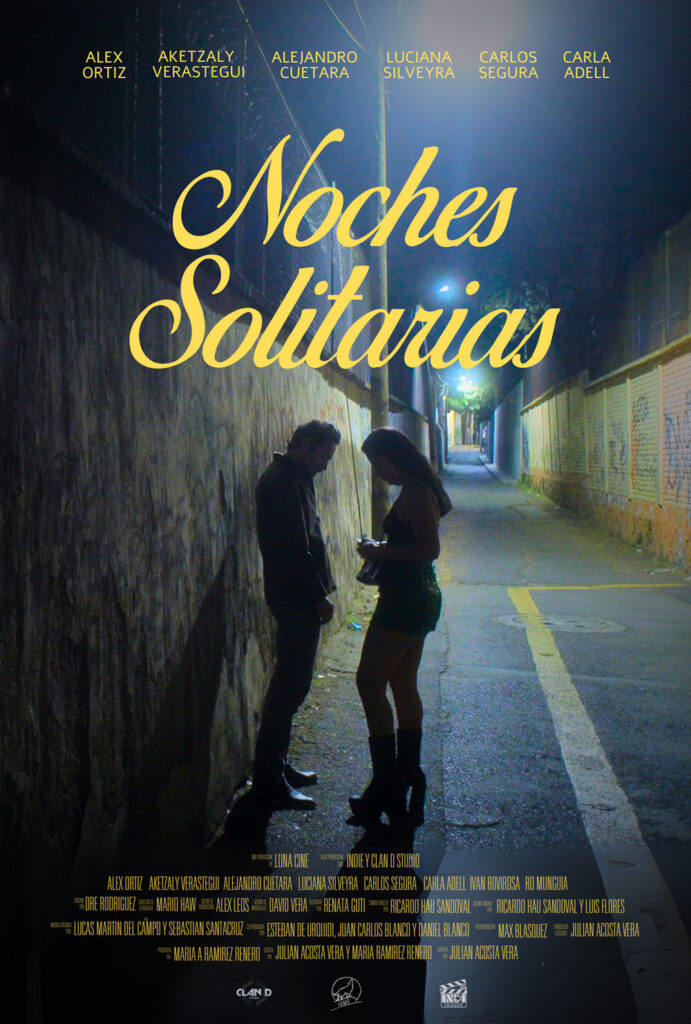
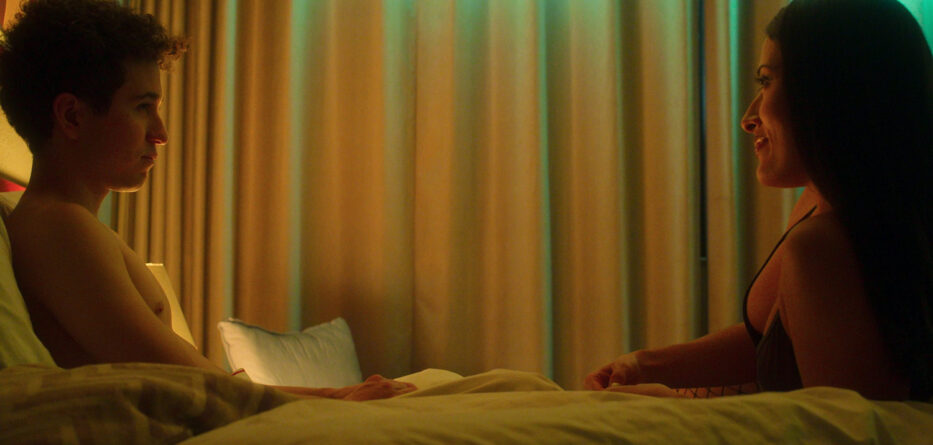
Noches Solitarias was directed and cowritten by Julián Acosta Vera and produced and cowritten by María Andrea Ramírez Renero. Photo Credit: Cortesía de Luna Cine
From Pretty Woman and The Nights of Cabiria to the recent Oscar winner for Best Picture, Anora, cinema has sought to show us the worlds of those who trade affection and connection for financial gain; it has also explored the complexities of this work, which remains hidden in the dark streets of every town and city, offering us glimpses of its trials and tribulations, and humanizing those who put their lives and bodies at risk for work.
The Cinequest Film and Creativity Festival is hosting the world premiere of a new exploration of these themes, titled Noches Solitarias. The film was written, directed, and produced by Mexican filmmakers Julián Acosta Vera and María Andrea Ramírez Renero, a real-life couple who met nearly five years ago while working in the film industry in Mexico City.
Both are passionate filmmakers with different approaches; their love of cinema and their understanding of the various processes involved in filmmaking have led them to forge not only a romantic relationship but also a strong professional partnership in the film industry.
This is their first feature film, with Acosta Vera serving as director and Ramírez Renero as producer. In addition to these roles, both are credited as co-screenwriters, among the many other responsibilities they took on to bring Noches Solitarias to life.
According to them, their work has been guided by artistic vision as their primary goal. Despite working with the limited resources typical of independent filmmaking, they sought to create a captivating and soulful narrative that would have the aesthetic and feel of a studio production and resonate with audiences around the world.
I recently spoke with the couple as they prepared for the world premiere of their film at the Cinequest Film and Creativity Festival in San Jose. During our conversation, I learned why they wanted to bring this story to life, what their collaboration on this project has been like, and why they hope audiences will see this film as a work focused on human connection, regardless of each individual’s social status.
The film tells the story of Andrés, an 18-year-old who is shy and restless, from a privileged family, whose world is turned upside down when he meets Lorena, a woman facing a harsh reality on the streets of Mexico City.
Noches Solitarias tells the story of their budding connection, exploring the vulnerability, desire, and courage that emerge when two marginalized lives intersect.
As Andrés and Lorena navigate the realms of secrecy, social expectations, and personal limitations, their relationship becomes a delicate balance of care, understanding, and longing. Each encounter challenges them to confront their own limitations, while opening them up to possibilities that their isolated worlds had rarely offered them.
Noches Solitarias is a tender yet unwavering exploration of love and human connection in unexpected places. It is a moving and intimate portrait of desire, courage, and the struggle to find authenticity in a world full of restrictions.
Editor’s note: At the time of publication, the film had already premiered on March 13 and had its final screening on March 17.
For more information about the film, follow the duo’s production company on Instagram: @lunacine_.
I wanted to start by asking if you could tell me a little about your career paths so far. How did you get into the arts?
María Andrea Ramírez Renero
Well, ever since I was very young, I’ve been drawn to art. The truth is, I come from a very artistic family. There are painters, filmmakers, and musicians in my family. So I’ve always been very connected to that world. And I studied film precisely because my dad makes films, and so does my aunt. So, I decided to study film.
I studied here in Mexico City, finished my degree, and went into film production. I’ve worked on various productions, from production assistant and producer to director. I’m also involved in planning. And honestly, I really love this whole industry. I love telling stories and helping bring them to life. That’s my career path.
Julián Acosta Vera
Well, I also come from an artistic family. My dad is a musician, and my mom, well, she’s not involved in the arts, but both of them always encouraged my brother and me to pursue the arts in every way. I mean, we always watched a lot of movies and listened to a lot of music, and yeah, that’s something that’s been very much a part of our lives since we were kids. And well, later I had a stepfather who was also in the film business; he’s a film director, and his son who was, I mean, back then was like a stepbrother, so to speak, is a cinematographer.
So, in a way, I’ve been involved with film since I was very young. I started film school when I was 17, and that’s when I began making films. I’ve really enjoyed writing ever since, I kind of got into it, I kind of developed a taste for it, and I made my first short film there at school, and well, we’ve been at it ever since. Obviously, after school, we started getting involved in other projects, and that’s how I also got into production.
I’ve worked on several films in production, which gave me an understanding not only of the artistic side, but also of logistics and execution, and honestly, that really helped us a lot. Well, I feel like those experiences were very useful tools for making this independent film we produced.
María Andrea Ramírez Renero
Yeah, because we both know both sides, from directing and producing, I think I understand directing too because I was also an assistant director, and I really enjoy directing and writing as well. Julián and I make a great team in that regard, because we both know both sides, right?
So did both of you take on a lot of different roles in the making of this film?
Julián Acosta Vera
Yeah, the truth is that ever since we wrote it, we were obviously thinking about how to bring it to life, so I think the great thing about me knowing production and María knowing directing is that we made a great team, and right from the writing stage, we didn’t overcomplicate things, we just tried to make a movie that we could actually make.
Does it help to take on those other production roles, since you’re familiar with both the production and artistic sides?
María Andrea Ramírez Renero
I definitely think so. I mean, since we were both on the same page on set, we really worked well as a team. So I understood his vision from the director’s perspective, and obviously I supported it from the production side, and he did the same from the director’s side, he didn’t get stubborn or fixate on things that couldn’t be done.
Julián Acosta Vera
I was always on the management side, so I understood the production needs; I think that was quite helpful because I tried not to get in her way during production.
María Andrea Ramírez Renero
It’s important to preserve the artistic vision, because so much happens during production—people say no, it can’t be done because of the budget or the resources—and I understood his artistic vision very well, so I tried to preserve it as much as possible within the constraints we had.
How did you start collaborating? How did you meet?
Julián Acosta Vera
Well, María and I are a couple; we’ve been together for four years and a few months. We first met, I mean, we met outside of our professional circle, but then we found out that we were both in the same field; well, at the time we were both studying film, so we started working on projects together.
María Andrea Ramírez Renero
We started with short films, and then we said, “Let’s do something bigger.”
Julián Acosta Vera
It was actually a short film I made, or rather, the first one we made together. María filmed it, and then we made another short film, which María produced. So, in a way, we ended up co-writing one. María actually acted in one of the short films.
María Andrea Ramírez Renero
Yeah, we’ve done it all. He starred in one of them, and since we know each other pretty well by now, that makes communication a lot easier, and we know exactly what we want from each other in the movie.
Julián Acosta Vera
And that was true when it came to writing too, it was really cool because, obviously, we’ve always worked as a team, and knowing what the other person wants allowed us to build this artistic connection that I’m really grateful for and very happy about.
So we decided to go for it, right? The truth is, it’s something that, obviously, given everything, given our backgrounds and where we were coming from, both personally and professionally, there came a point where, since we’d also worked on other projects together, we decided to go for it. We thought, “We can make a movie.” I mean, we believed we knew what we needed, we believed we could tell a story, and we knew what story we wanted to tell, so we decided to go ahead and make it.
María Andrea Ramírez Renero
We believe in ourselves just as we believe in what we do. If we believe in ourselves and believe that if we did it, the world would see what we’re capable of.
Julián Acosta Vera
Sure, and that’s another thing I’d like to share: it is possible to make films, I mean, it doesn’t always have to be the traditional way where a studio gives you millions of dollars. Ultimately, I think what matters is the artistic vision and finding a way to bring it to life. I’ve always had a lot of admiration for independent filmmakers, all those filmmakers who, well, kind of just dove right in without asking for permission.
Speaking of the story behind Noches Solitarias, what inspired the story, and why did you want to tell it?
Julián Acosta Vera
Well, actually, there are a few things. I mean, I couldn’t exactly say where the idea came from; it was something we developed over time. well, one thing I can say is that I worked on a project where we were filming in a hotel, and across from that hotel there was a red-light district, so we were filming there for several days, and I had the chance to see the women who were there in their daily lives, I mean, we weren’t just seeing what’s visible on the surface, which is a woman standing there and looking for a client.
Instead, we got to see them in more everyday situations, like when they went out for tacos and things like that, which I always found pretty interesting. Yeah, sure, trying to see them from a perspective free of the prejudices we usually have, I think that’s what sparked something.
And well, the main character is a guy, a lonely upper-class guy, and I think that since we’ve spent time with people from all walks of life, we’ve always understood that social class doesn’t really matter that much; in the end, what all of us are looking for is some kind of connection, and that’s what inspired us.
Obviously, social context shapes expectations and determines the kind of person you become, so we found it interesting to play with the different social positions of the two characters, but ultimately, we wanted to make it very clear that all they’re really looking for is an emotional connection. I think that’s kind of the reason why.
And would you say that’s, what you just said, is the most important theme of the movie, or what would it be?
María Andrea Ramírez Renero
Yeah, yeah, I think so too. I think the film touches on a lot of subjects, but I think the main one is really about seeking an intimate connection, right? In this, well, in this system we live in.
Julián Acosta Vera
Yeah, kind of like I was saying I mean, in the end, all we’re really looking for is a connection. And even though there are social, family, relationship, or financial expectations, or there might be pressures, for example, in the case of Lorena, who’s the prostitute in the movie, there are even pressures from her pimp, in the end, we’re all human beings, and what we’re looking for is a human connection and not to feel alone. I also think that’s why the movie has that title, it’s like we end up there.
María Andrea Ramírez Renero
And even more so in a city as big as Mexico City, which has so many contrasts and so many different realities. I think it’s really nice to realize that, in the end, no matter what your background is, you have one thing in common: the search for a deep, genuine connection.
Julián Acosta Vera
Exactly, and to elaborate on that a bit, we wrote the main character, Andrés, as a guy who isn’t entirely at ease with the path and expectations ahead of him, he doesn’t feel comfortable either; he’s kind of like an alien, a bit out of this world. Obviously, with all the traditional values of manhood that are taught, plus all these expectations of success and everything that revolves around a guy who’s about to finish high school and is about to start his life, and all the loneliness that comes with that, that really inspired us to create this character.
And finally, what do you hope the audience will take away from this movie when they leave the theater?
Julián Acosta Vera
Well, I think it really depends on the individual. I mean, as I was saying, everyone’s interpretation is different, and I think that’s what’s so great about art. We can all look at the same painting, but everyone will take something different away from it; we can listen to the same song, but it will move each of us in different ways.
But yes, what I was saying is that, in the end, what we’re all looking for is a connection, it’s about not feeling alone, and I think the film explores that from many different perspectives, so to speak, and that’s what interests me: that it sparks a conversation on the subject. We’re not so much looking to present a thesis, so to speak, but rather to pose a question so that viewers can take away whatever they believe the film means.
María Andrea Ramírez Renero
Yes, I hope people feel that they connect with the film, that it makes them ask themselves questions, that they walk out and say, “What would I do if I were in those characters’ shoes? How would I handle it?” And I think that’s what Julián is saying: how to spark this conversation, bring up new topics, and explore what happened to them.
Everyone will interpret the movie however they want, but the point is to spark conversation and have a good time, to take a moment to feel, to enjoy, whether that means laughing or crying. It really depends on the person, but the idea is to immerse yourself in the cinematic experience and enjoy it.